
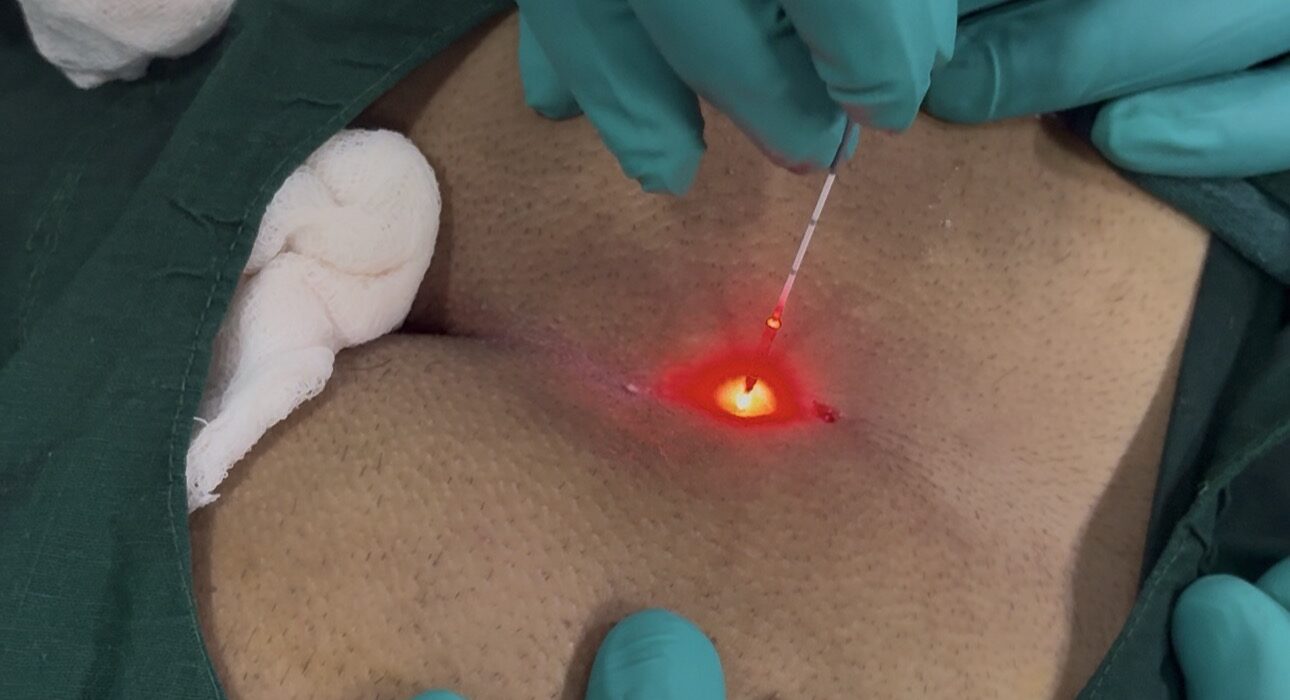
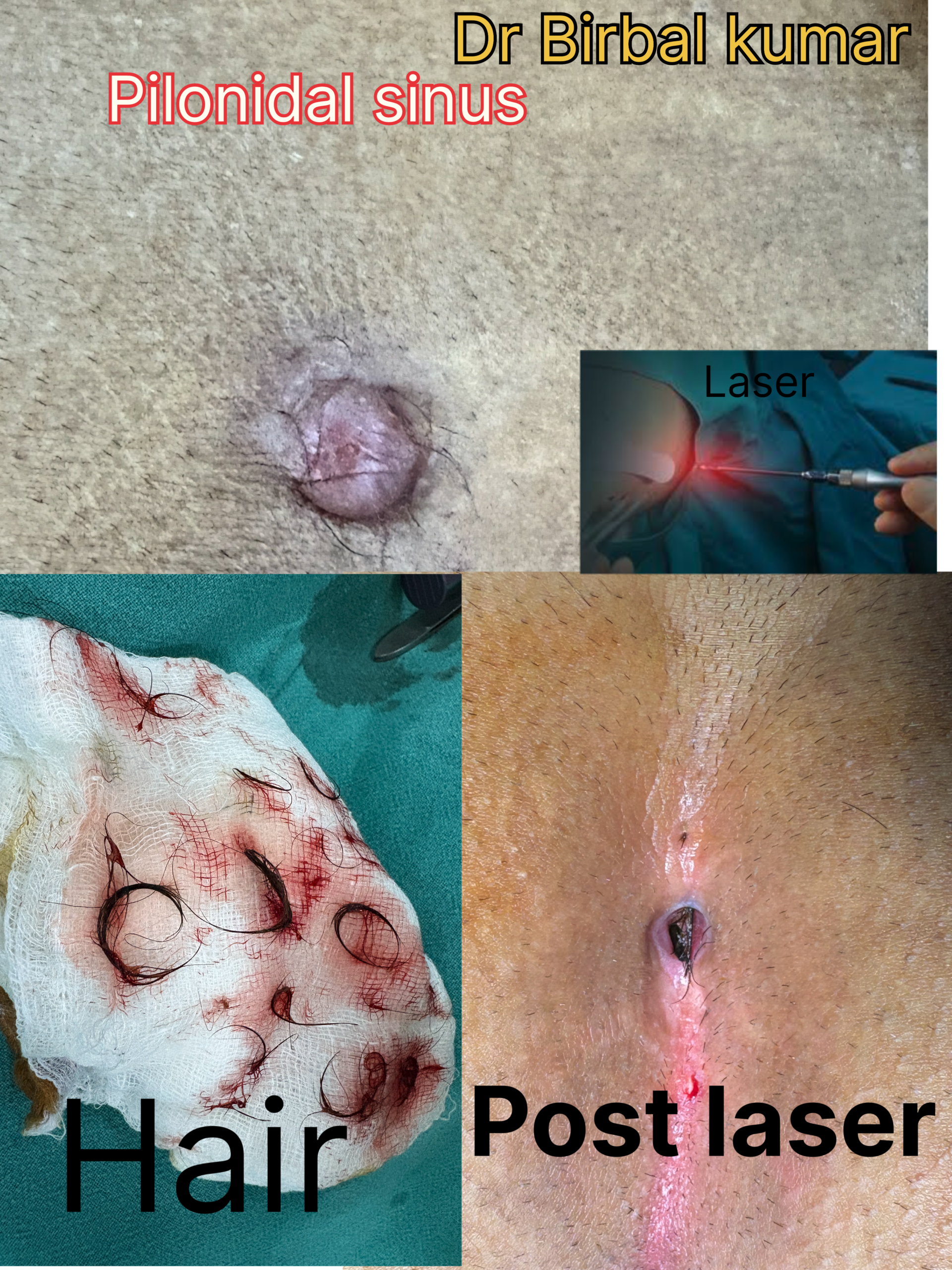
Endoscopic Pilonidal Sinus Treatment {Epsit} with laser ablation vs Limberg Flap for Pilonidal Sinus:
EPSiT (Endoscopic Pilonidal Sinus Treatment) is a minimally invasive procedure for pilonidal sinus, using a special camera (fistuloscope) to see inside the sinus tract, clean out debris and hair, and destroy the infected lining with heat or laser, leading to faster healing, less pain, and quicker return to normal activities compared to traditional surgery. It’s effective for simple cases and even recurrent disease, offering good results with minimal scarring, though complex cases might still need major surgery.
What EPSiT involves:
- Exploration: A small opening is made, and a thin endoscope with a camera is inserted to visualize the entire tract, including hidden side tunnels.
- Cleaning: Hair, pus, and dead tissue are removed using small instruments like brushes or forceps.
- Treatment: The lining of the sinus and any infected tissue are destroyed using electrocautery (heat) or laser, which also helps stop bleeding and promotes healing.
- Wound Care: The resulting wound is small and requires minimal dressing, with patients often washing it daily.
Benefits of EPSiT:
Minimal Pain: Patients report significantly less postoperative pain compared to traditional wide excision.
Quick Recovery: Most patients return to work within 1–3 days.
No Large Wounds: The procedure requires only small incisions (about 5mm), which means no painful daily packing of deep wounds is necessary.
Aesthetic Results: Because there are no large scars, the cosmetic outcome is superior to open surgery.
High Success Rate: Studies show a wound healing rate of approximately 95%.
How the Procedure Works
The procedure is typically performed as a day-case surgery under general, spinal, or local anesthesia. It consists of two main phases:
Operative Phase: Using the camera’s visual guide, the surgeon removes hair and debris with specialized tongs or brushes. An electrode is then used to ablate (cauterize) the diseased tissue and seal the tracts from within..
Diagnostic Phase: A fistuloscope (tiny camera) is inserted through the sinus opening to map the internal tracts, secondary tunnels, and any abscess cavities.
Comparison at a Glance:
| Feature | Traditional Surgery | EPSiT |
|---|---|---|
| Incision Size | Large (often several cm) | Minimal (~5mm) |
| Wound Packing | Required (often daily) | Not required |
| Return to Work | 3–5 weeks | 4–6 days |
| Recurrence Rate | 20–30% | ~5–10% |
3 Comments
The Common category includes then following block: Paragraph, image, heading, latest gallery, quote, audio, cover, video. The paragraphs block is the default block type. This is should not have any and alignment of any kind. Category and then there are many things to following blocks and many more.
The Common category includes then following block: Paragraph, image, heading, latest gallery, quote, audio, cover, video. The paragraphs block is the default block type. This is should not to have any alignment of any kind.
The Common category includes then following block: Paragraph, image, heading, latest gallery, quote, audio, cover, video. The paragraphs block is the default block type. This is should not have any there alignment of any kind. Category and then there are many things too following blocks and many more.