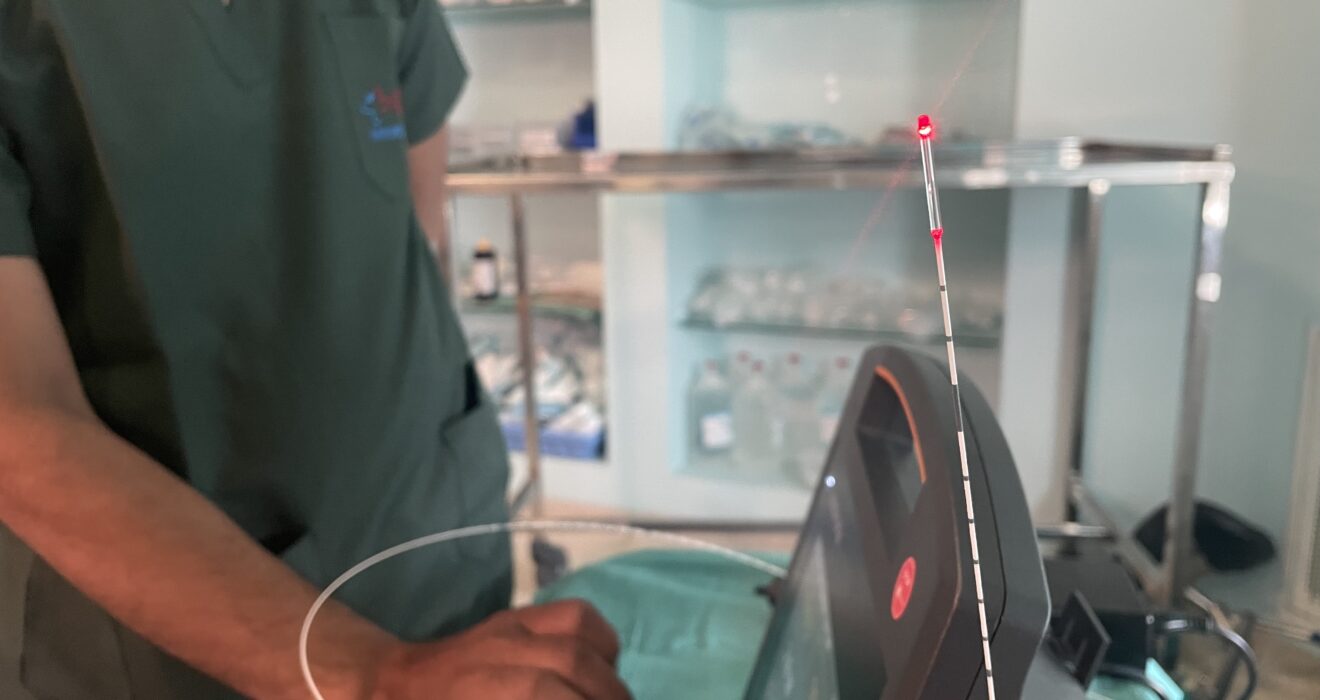
Treating varicose veins in a patient with a history of skin burns on the legs presents a complex case requiring specialized care
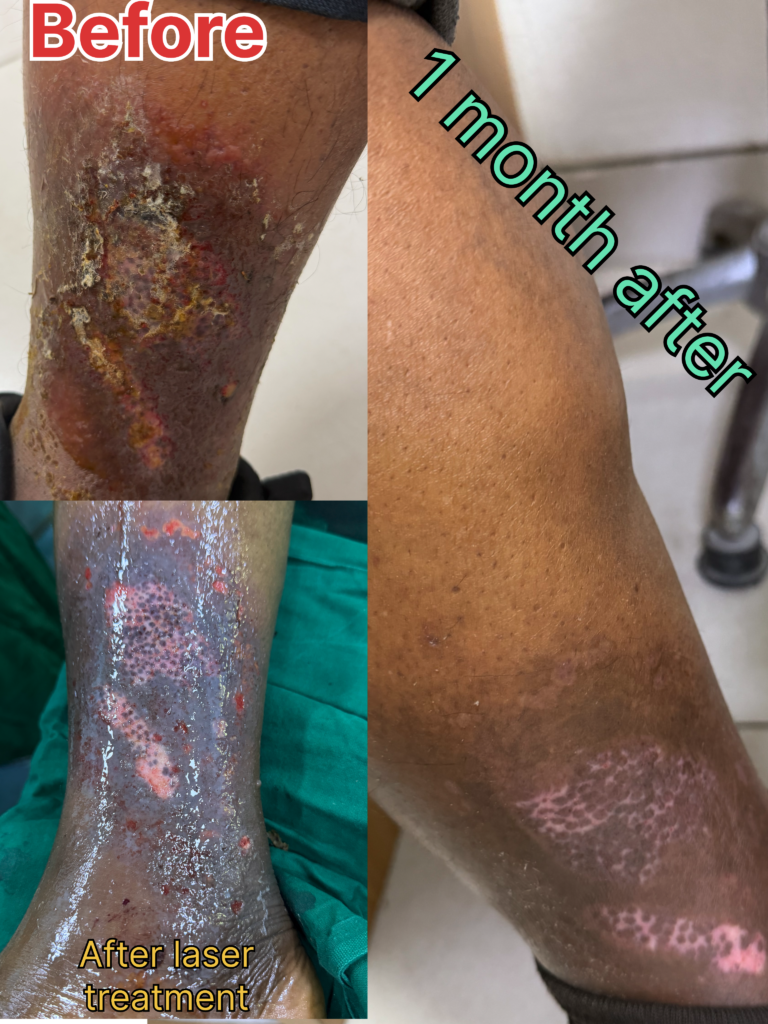
Why This Case is Complicated:-
- Reduced Blood Supply/Fibrosis: Burned skin often has damaged underlying tissue, reduced circulation, and excessive fibrosis (scar tissue). This makes it harder for the skin to heal after any intervention, increasing the risk of, for example, persistent ulceration.
- Skin Nerve Damage: Burned skin is often already sensitive or has compromised sensation. The addition of heat-based treatments (laser or radiofrequency) increases the risk of thermal damage to surrounding nerves (paraesthesia).
- Increased Burn Risk: Ablating veins close to a surface that has previously suffered a full-thickness burn risks creating new, severe, and difficult-to-treat skin burns.
Treatment Options for Complicated Cases
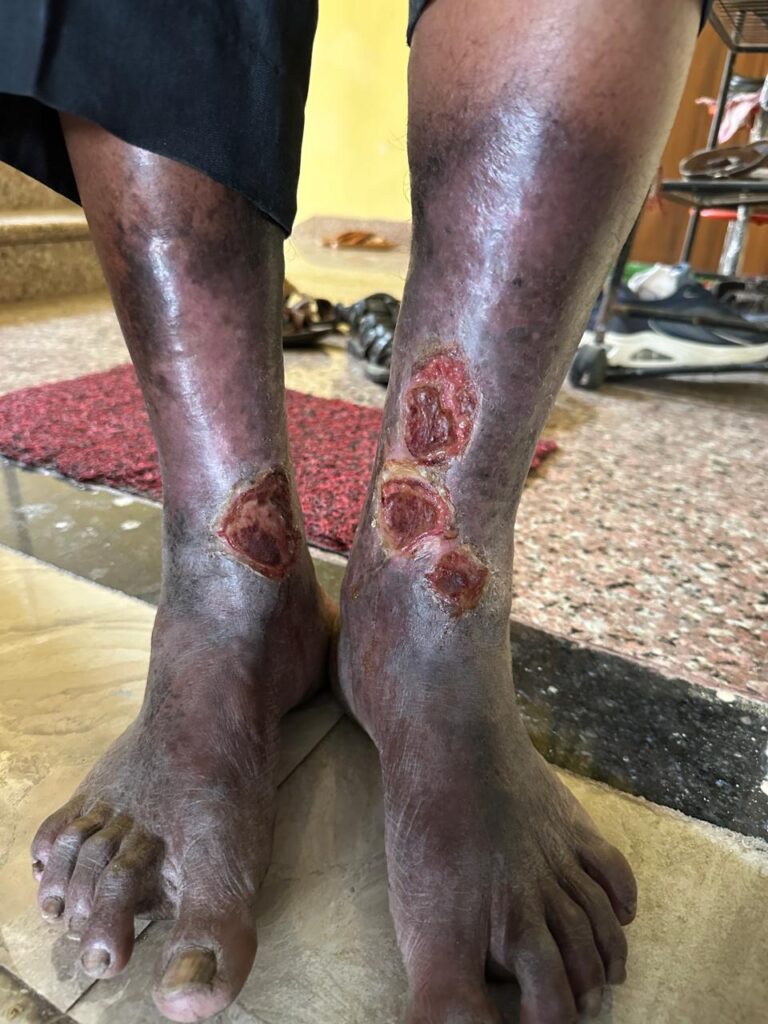
- Non-Thermal Ablation (NTA): This is often preferred over thermal methods (laser/RF) for damaged skin. Techniques like Mechanochemical Ablation (MOCA) or Cyanoacrylate Vein Ablation (glue) do not use heat, thereby eliminating the risk of further thermal skin burns.
- Foam Sclerotherapy: Ultrasound-guided foam sclerotherapy is a safe, non-thermal option, although it may require more sessions than in non-scarred patients.
- Modified Endovenous Laser Ablation (EVLA): If thermal methods are used, a highly experienced surgeon is necessary. The use of higher volumes of tumescent anesthesia (local anesthesia to insulate the vein) is critical to minimize risks.
- Conservative Management: If the tissue is extremely fragile, conservative management—such as high-quality compression stockings (up to 30-40 mmHg), compression bandages, and lifestyle adjustments (elevating legs)—is essential to manage symptoms.
Management and Safety
- Preventing Further Injury: It is crucial to avoid direct, high-level heat application to the previously burned area.
- Post-Procedure Care: Due to the fragile skin, extra care is required during post-operative recovery to avoid skin breakage. If ulcers are present, specialized wound care is required alongside venous pressure reduction.
- Case Specificity: In cases where superficial veins are severely damaged, specialized, tailored approaches (such as mapping the veins via ultrasound) are required to locate healthy areas for catheter access.